Trade marketing: what it is, strategies and examples
What trade marketing is, the strategies it uses to activate the channel, and concrete examples. A guide to understanding how to motivate distributors, salespeople, and points of sale.

Contents
A brand can have the best product and the best advertising, and still lose the sale in the last meter: the shelf, the counter, the salesperson's recommendation. That last meter —where the consumer decides and the channel influences— is the territory of trade marketing. It's the discipline that connects brand marketing with the reality of the point of sale and the distribution channel, and its effectiveness depends less on advertising creativity than on the ability to motivate those who sell the product without being employees of the company. This guide explains what trade marketing is, the strategies it uses, concrete examples, and why channel incentive programs are one of its most decisive levers.
What is trade marketing?
Trade marketing is the set of strategies aimed at driving a product's sale through the distribution channel —wholesalers, distributors, retailers, points of sale— rather than directly to the end consumer. Its goal is for the product not only to reach the point of sale, but to sell from there: good display, availability, recommendation, and turnover.
Unlike traditional marketing, which speaks to the consumer, trade marketing speaks to the channel: those who decide what to display, what to recommend, and what stock to keep. That's why it operates on two simultaneous fronts: sell in (getting the channel to buy and stock the product) and sell out (getting that product to sell to the end consumer and turn over). A trade marketing strategy that only pushes sell in without ensuring sell out ends with stagnant stock in the channel and conflicts with the distributor.
Why does trade marketing matter for a brand?
Trade marketing matters because in many categories the channel is what defines the sale. A retail salesperson who recommends brand A instead of B, a distributor who prioritizes a product in its sales force, a point of sale that gives better display: each of those decisions happens outside the company, in people who aren't on its payroll. Influencing them is what separates a present brand from a chosen brand.
This becomes critical in broad distribution structures —electronics, consumer goods, insurance, telecommunications— where the brand depends on thousands of external salespeople. Advertising investment can generate demand, but if the channel doesn't follow through, that demand goes to the competitor who did know how to motivate whoever was at the counter.
What are trade marketing strategies?
Trade marketing strategies combine actions on the point of sale and on the channel's people. The main ones:
Point-of-sale management includes display, POP material, shelf positioning, and shopper-directed promotions. It's the visible face of trade marketing.
Promotions and activations —volume discounts, combos, seasonal dynamics— seek to accelerate turnover and sell out.
And, the most decisive and often the worst-executed, incentives for the channel and the sales force: programs that reward distributors, retail salespeople, and promoters for meeting sales, recommendation, or display goals. This is where trade marketing becomes a motivation problem: how do you get a salesperson who isn't your employee to prioritize your product? The answer is a clear, traceable, attractive incentives system that rewards concrete behaviors and pays out without friction.
Examples of trade marketing
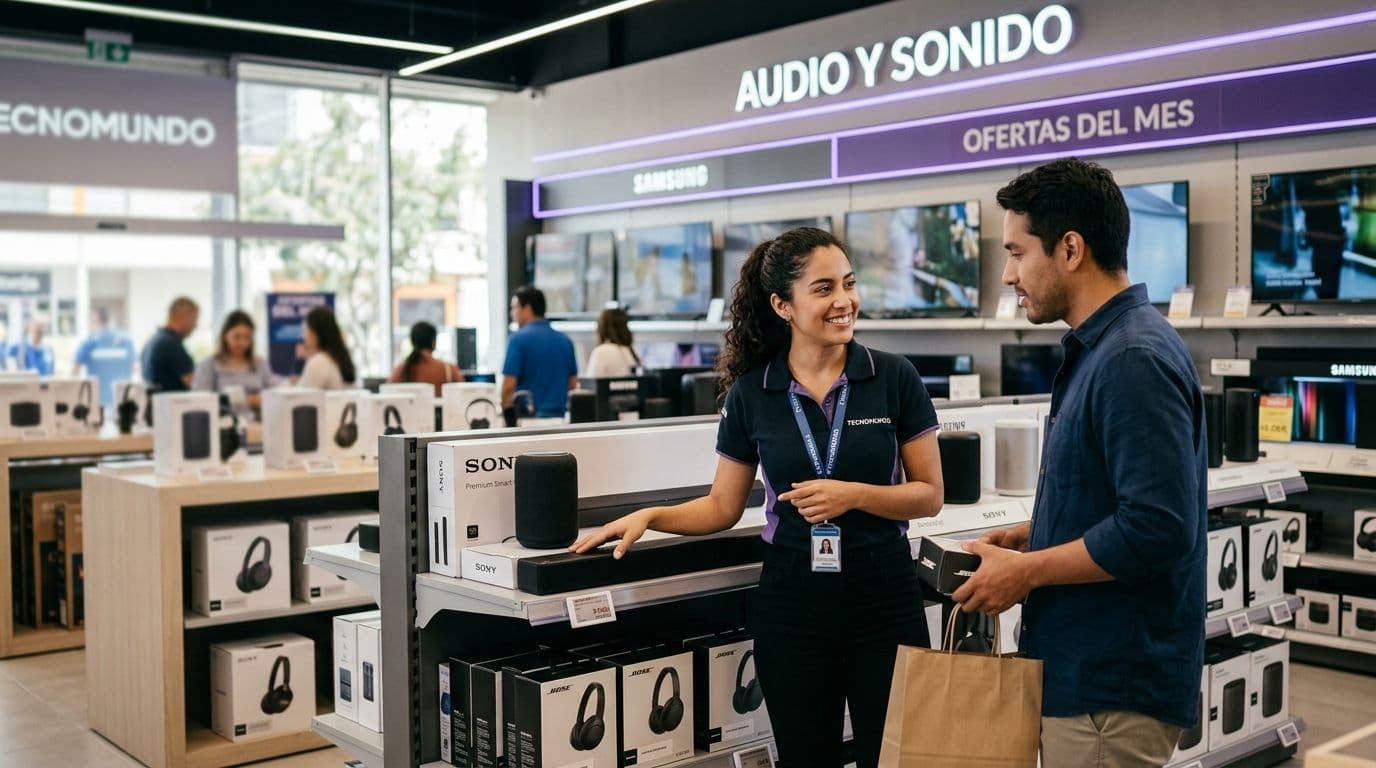
Examples make the concept tangible. An electronics brand that rewards retail-chain salespeople with redeemable points for each unit sold of its product, measuring sell out in real time, is trade marketing applied to the channel's sales force —the model operated by Xiaomi or HP to regain visibility and control over their commercial channel. An insurer that incentivizes its network of external brokers for placing policies is trade marketing in financial services. And a consumer-goods brand that combines preferential display with a points program for neighborhood-store owners is activating channel and point of sale at once.
The common pattern of examples that work: they measure the real result (sell out, not just sell in), reward concrete behaviors, and make collecting the incentive simple and transparent for whoever is in the channel.
How do you motivate the sales channel?
Motivating an external channel has a difficulty the internal team doesn't: the brand doesn't control those people's salary or culture. It can only influence with well-designed incentives. The principles that work:
- Reward sell out, not just sell in. If only the channel's purchase is rewarded, stock accumulates; rewarding the final sale aligns interests.
- Make the incentive traceable and predictable. The channel salesperson has to understand how much they earn and trust they'll collect it. Opacity kills channel motivation faster than internal-team motivation.
- Pay out without friction. Collecting an incentive shouldn't require paperwork: the simpler the redemption, the more it motivates.
- Measure in real time to adjust the dynamic based on what works.
A poorly managed channel incentive program —manual calculations, delays, confusing rules— generates more distrust than motivation. The technology that automates calculation, tracking, and redemption is what makes trade marketing scalable in structures of thousands of salespeople.
Trade marketing as a channel motivation problem
Trade marketing is, at its core, the art of getting people who aren't your employees to prioritize your product. Display and promotions matter, but the decisive lever is usually how the channel and its sales force are motivated. The brands that win the last meter aren't the ones that invest most in advertising, but the ones that best align the incentives of those who sell.
The hard operational part is managing those incentives at scale, with traceability and without friction. Maslow operates incentive programs for external channels —distributors, retail salespeople, broker networks— with clear rules, real-time sell-out measurement, and simple redemption, the model with which brands like Xiaomi and HP regained control over their commercial channel. Trade marketing stops depending on spreadsheets and promises, and becomes a measurable system.